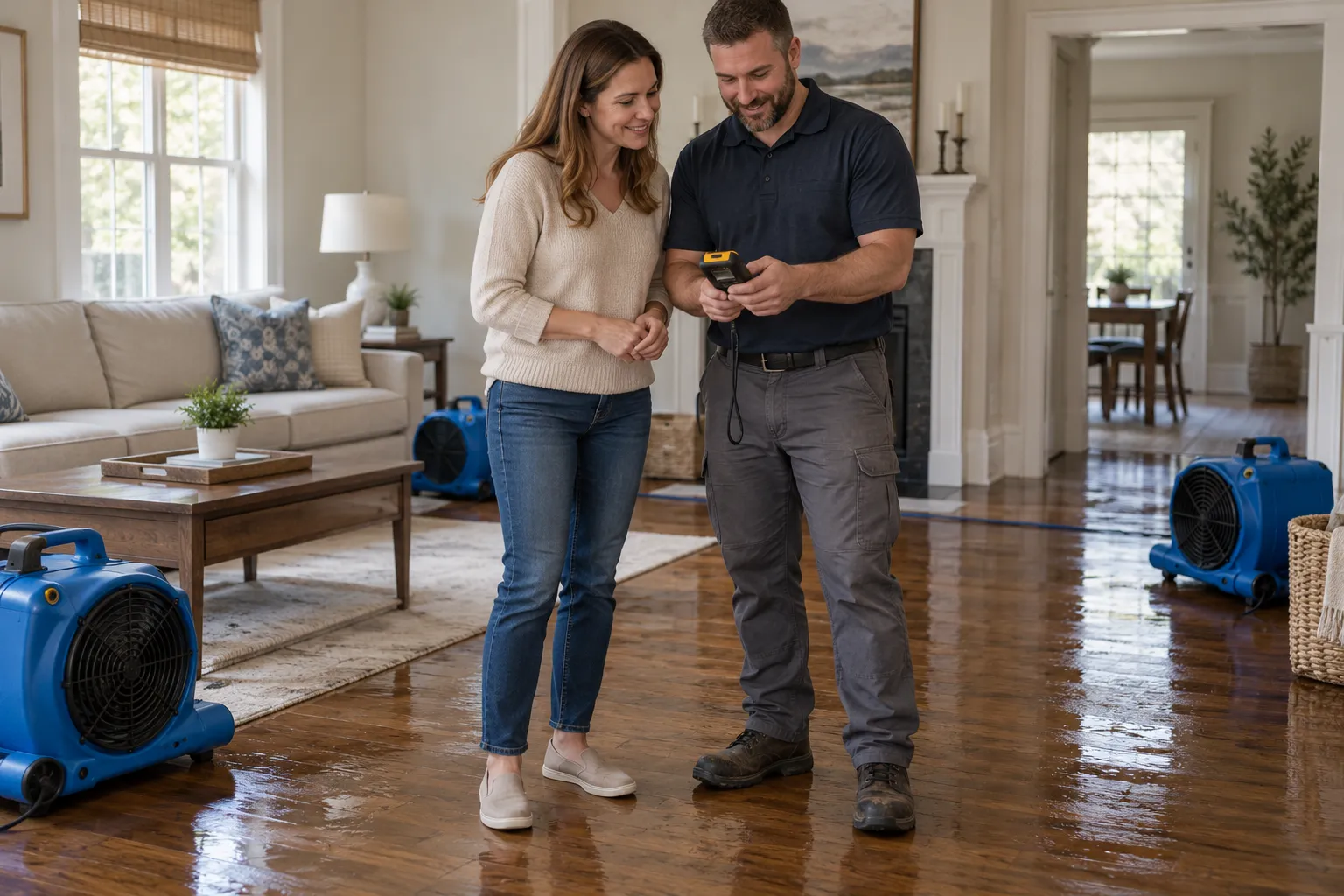
Start with safety, then call
Water in the house is stressful. It can also be risky. Before you think about cleanup, think about who could get hurt.
Do turn off power to a wet area only if you can reach the panel without stepping in water. Do keep kids and pets out of the wet space. Do take photos of the damage before anything is moved.
Do not walk into a flooded basement until the electrical risk is clear. Do not touch outlets, cords or appliances sitting in water. Do not mix cleaning chemicals to deal with the smell.
Bankscovers Restoration is a referral service for homeowners in Detroit, MI. Bankscovers Restoration does not do the work. It connects you with an independent provider in our network who handles emergency water damage repair, water extraction and structural drying.
Request Help
Many providers can respond quickly, but availability varies. Request a callback to check provider availability in your part of the Metro Detroit area. Whoever you talk to, ask for the plan and the price in writing.
How It Works
What Bankscovers Restoration does
Bankscovers Restoration takes your request and passes it to an independent water damage restoration provider in our network. The provider contacts you, looks at the damage and explains what it will take to fix it. Bankscovers Restoration does not send crews, set prices or do any of the repair work.
Why you should compare
Every provider sets its own price, schedule and method. Two quotes for the same flooded room can look very different. That is normal, but it means you should ask what is included, what is left out, and what could change the bill if hidden damage turns up behind a wall.
The three kinds of help
Most homeowners need one of these:
- Water damage restoration: drying, cleaning and repairing what the water touched.
- Water extraction and structural drying: pulling out standing water, then drying walls, floors and framing.
- Flooded basement cleanup: clearing water, mud and ruined items from the space below ground.
What to know before work starts
A clear plan beats a rushed one. Before anyone starts, you should know the steps, the rough timeline, the price range and what the written quote says. A good provider explains these in plain words and answers follow-up questions without pressure.
A note on insurance
Some policies may cover sudden damage, so check your policy. Providers can often help document damage for a claim. Coverage is decided by your insurer, not by Bankscovers Restoration or a provider.
Local Homes, Local Water Risks
Homes in Detroit and the Metro Detroit area deal with a mix of weather. Cold winters bring deep frost that can crack pipes. Hot, humid summers help mold grow after a leak. Severe thunderstorms and hail can damage roofs and let water in. Spring flooding can push water into low spots.
The housing matters too. Many homes here have full basements with sump pumps. If a pump fails during a storm, a basement can fill fast. Frame houses that are many decades old may have worn plumbing, older roofs and hidden gaps. Bungalows and ranch homes often have one main floor, so water can spread across a large area.
Providers in our network know these home types and these seasons. They can often tell you whether the water came from a pump failure, a burst pipe or a storm, and that changes the plan.
Request Help
If you are not sure where the water came from, say so when you ask for an estimate. A provider can look for the source and explain your options in writing before you agree to anything.
What Every Homeowner Should Know First
What drives the price
The main factors are how much water there is, how long it sat, how far it spread and which materials got wet. Clean water from a supply line costs less to handle than dirty water from a storm or sewer backup. Size of the area and the equipment needed also matter.
Typical U.S. cost ranges
Small, fast jobs often run a few hundred to a couple of thousand dollars. Moderate water extraction and structural drying commonly lands around $1,000 to $5,000. Large or severe jobs, including a deep flooded basement, can pass $10,000. These are typical ranges only. Your job may differ, so get a written quote.
Why a written quote matters
A written quote lists the work, the equipment and the scope. It protects you from vague pricing and surprise add-ons. Ask how the price changes if the provider finds more damage once walls or floors are opened.
Your options
You can dry and save materials, remove and replace the wet parts, or do a mix of both. Soaked carpet pad and drywall are often removed. Solid wood and concrete can often be dried. Ask the provider to explain why they suggest each choice.
Do and do not
Do shut off the water source if it is safe. Do remove small valuables and lift furniture off wet floors. Do not use a regular vacuum on water. Do not hide wet materials behind new paint or flooring. Do not sign anything you have not read.
Mold and time
Mold can start to grow when materials stay damp for a couple of days, especially in humid summers. Thorough structural drying lowers that risk. If you see or smell mold, tell the provider when you ask for an estimate.
Questions to ask a provider
Ask about the plan, the timeline, what is and is not included, how they measure dryness, and how they handle extra damage. Ask if they can help document the loss for your insurer. Clear answers are a good sign.
Before you hire anyone
Take your time on the quote, even when you feel pressure. Compare at least two if you can. Hiring is always your choice, and requesting an estimate through Bankscovers Restoration comes with no obligation.
Ready When You Are
Tell us where the water is, how long it has been there and what you can see. Your request goes to an independent provider in our network.
Request Help
Request a callback to check provider availability, or send your details by email at contact@bankscovers.world. Hiring is up to you.